Projects

Project on AI and Evidence (PAIE)

The Project on AI and Evidence (PAIE) is an initiative at J-PAL at MIT that identifies, evaluates, and scales innovative applications of AI for social good and in the fight against poverty, bringing together AI adopters, tech companies, and researchers. I joined J-PAL as Senior Advisor in July 2026 to work on this portfolio across research, policy, and practice.

PAIE funds rigorous research — largely randomized evaluations — on AI applications, builds practical guidance for evaluating AI-based programs, and develops capacity among researchers, governments, and NGOs. Focus sectors include education, health, labor markets, climate change, and financial inclusion.

Social Capital Atlas

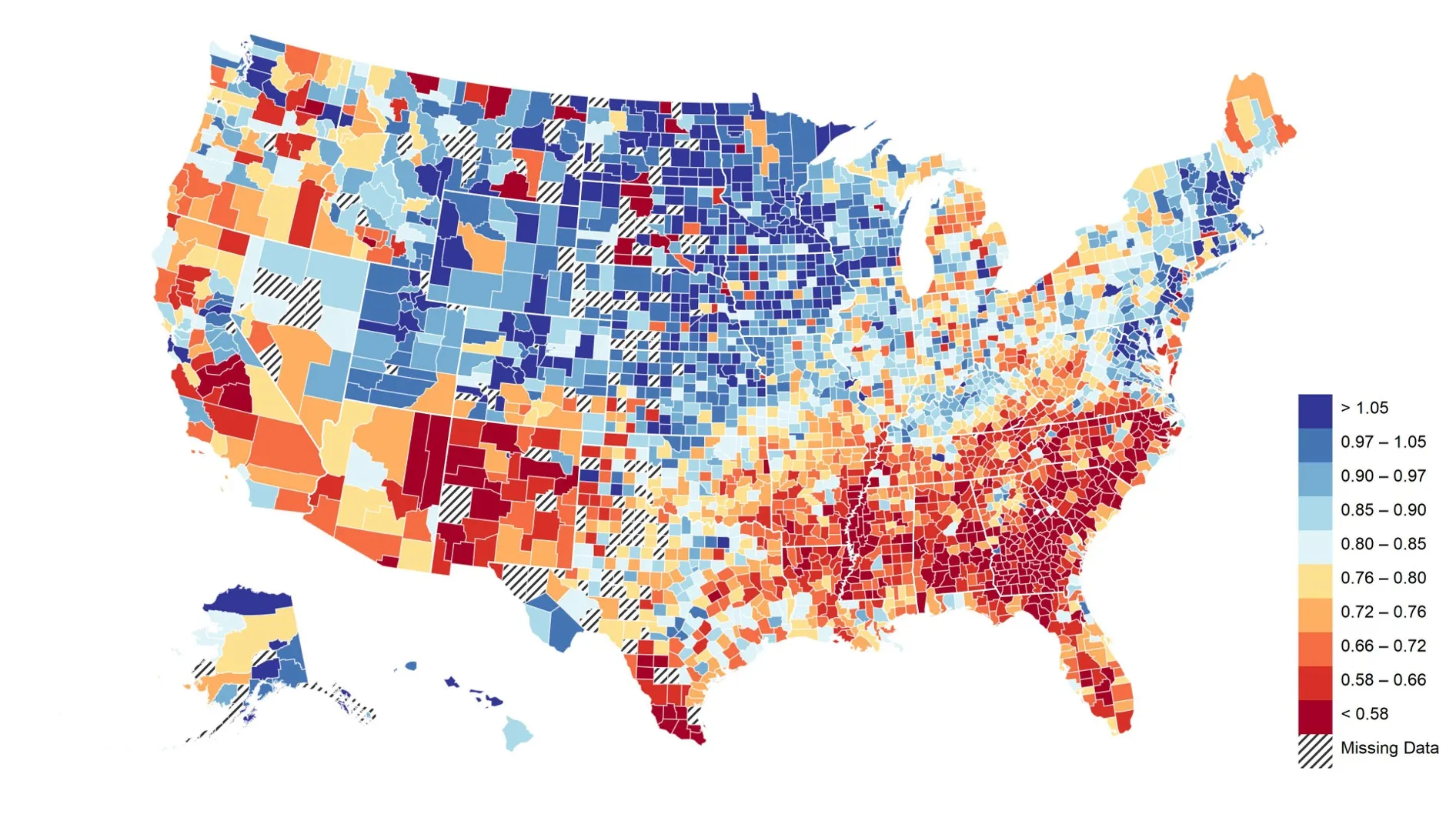
The Social Capital Atlas is a public dataset and interactive tool measuring three forms of social capital — economic connectedness, social cohesion, and civic engagement — across nearly every U.S. ZIP code, high school, and college. The underlying research showed that economic connectedness is one of the strongest community-level predictors of upward mobility in the United States.

Social Connectedness Index

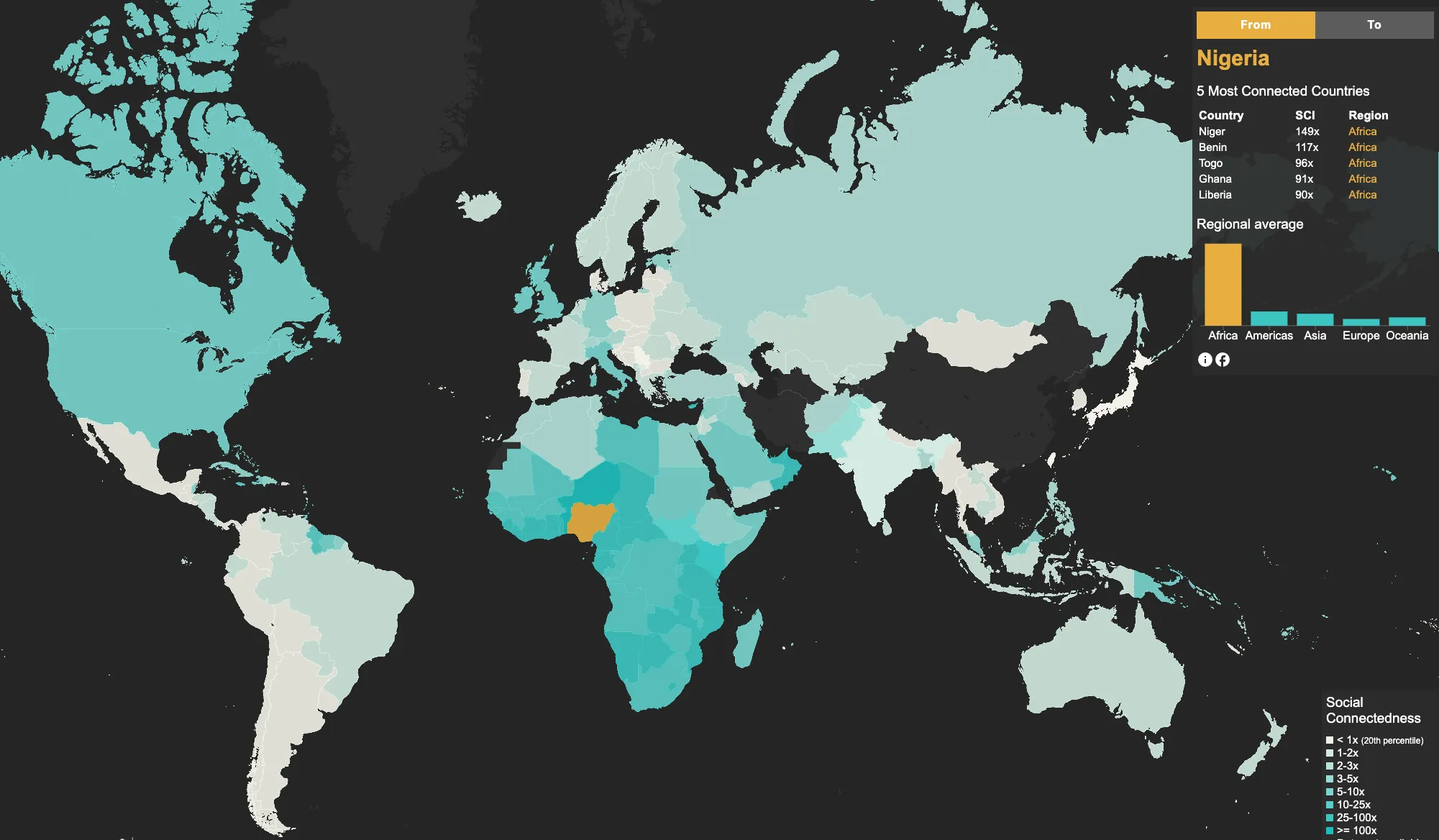
The Social Connectedness Index (SCI) measures the relative probability of friendship between people in different locations. The dataset has been used by researchers across economics, political science, public health, and sociology to study migration, trade, the spread of COVID-19, knowledge diffusion, and inequality.

UK Social Capital Atlas

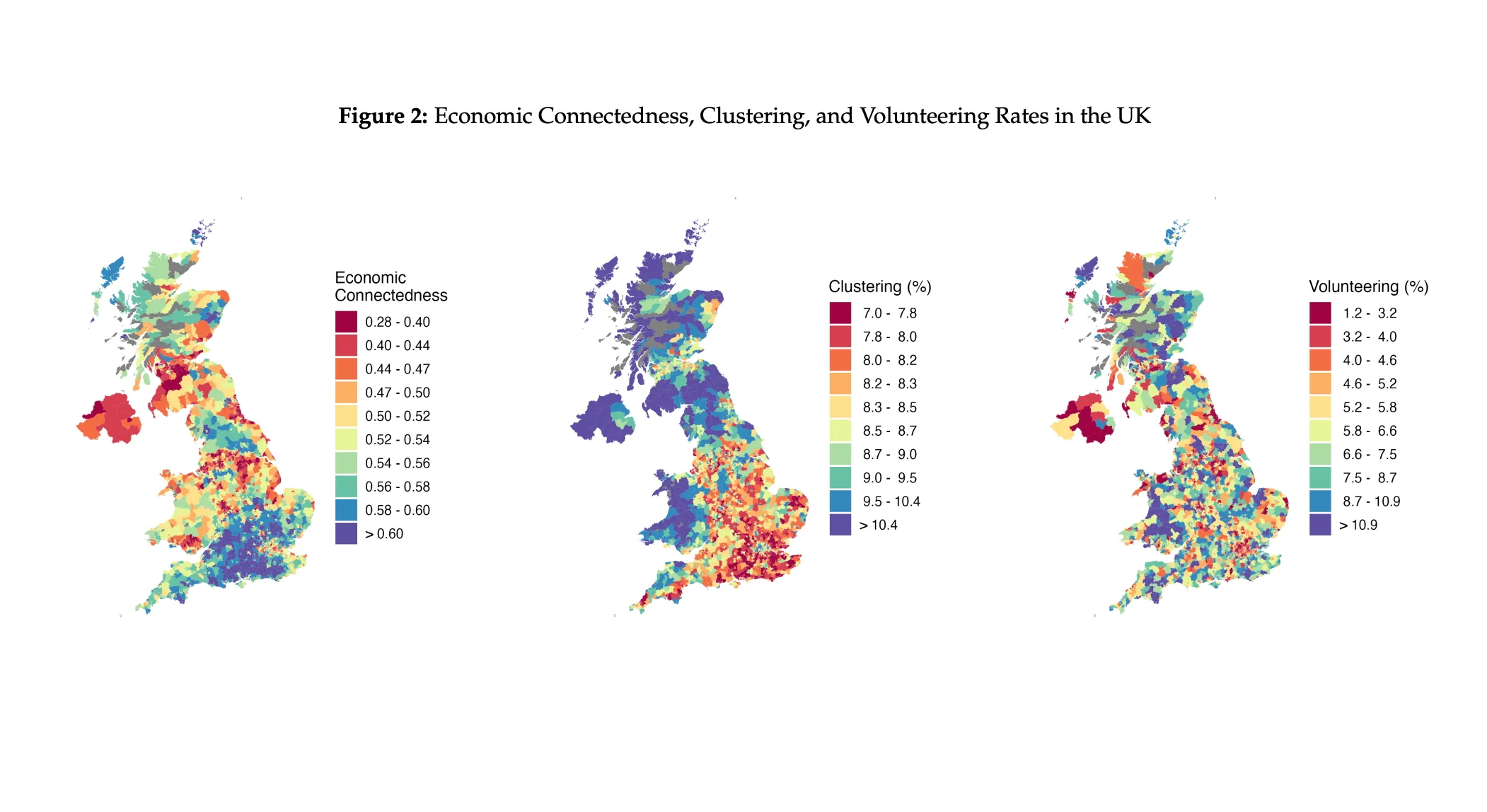
The UK Social Capital Atlas maps social capital across the United Kingdom — including economic connectedness, the extent to which lower- and higher-income people are friends — built from the friendship networks of roughly 20 million UK adults (around six billion friendships) on Facebook. It is the UK counterpart to the US Social Capital Atlas, produced with the Behavioural Insights Team and partners including Meta, the RSA, the Neighbourly Lab, Opportunity Insights, and Stripe Partners, with funding from the Nuffield Foundation.

The work documents that children from lower-income families who grow up in more economically connected UK communities go on to earn substantially more as adults, and that shared activities and the built environment — not just geographic proximity — shape who becomes friends.